The Angel, the Marriage, and Cary Grant Being… Cary Grant
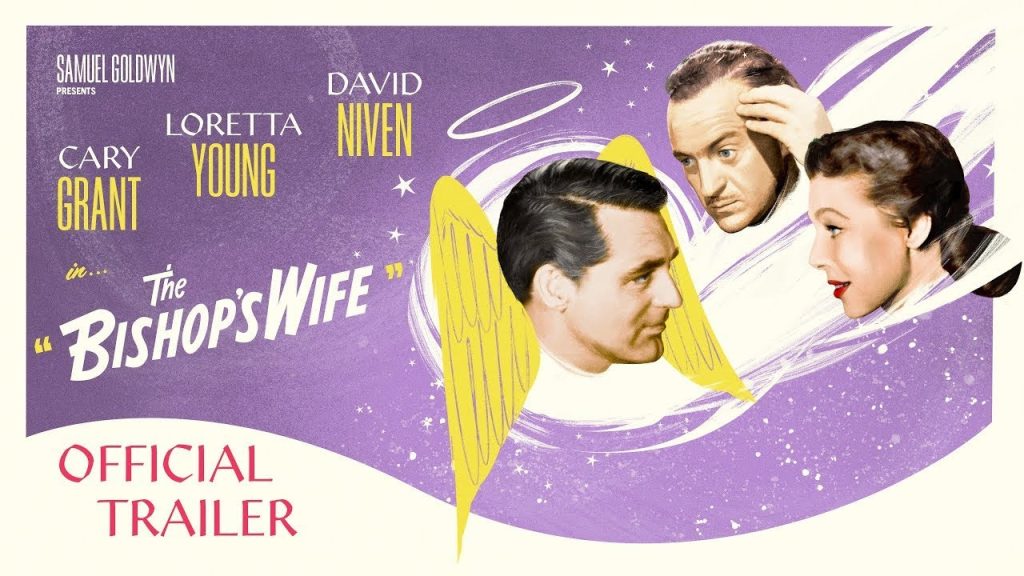
A Heavenly, Heartfelt Look Back at The Bishop’s Wife (1947)
Some Christmas movies hit you with big spectacle, wild plots, and over-the-top sentiment. And then there are the ones that sneak in quietly, sit down beside you, pour a warm cup of tea, and gently rearrange your heart. The Bishop’s Wife (1947) is absolutely that second kind of movie. It’s soft, romantic, thoughtful, and somehow magical without ever needing fireworks, flying reindeer chases, or exploding candy canes. Instead, it gives us something even more powerful: an angel, a struggling marriage, and Cary Grant being effortlessly charming in a way that feels basically unfair to the rest of humanity.
The story centers on a bishop who’s so consumed with building a grand cathedral that he’s slowly losing sight of his wife, his home, and honestly, himself. In his desperation, he prays for divine help—and gets more than he bargained for when an angel named Dudley shows up. This is where Cary Grant enters the picture, and the entire movie quietly tilts on its axis. Dudley isn’t some booming, glowing, thunder-voiced celestial being. He’s gentle. He’s funny. He’s warm. He skates. He listens. And he instantly becomes the emotional center of every room he walks into.
The bishop’s wife, played by Loretta Young, is one of my favorite silent emotional anchors in any Christmas film. She’s kind, patient, and quietly lonely in a way that hits harder than open melodrama ever could. You can tell she loves her husband deeply, but she’s also starving for attention, connection, and simple joy. Watching Dudley gently bring those things back into her world—through skating, music, conversation, and warmth—is where the real magic of the movie lives.
And then there’s the bishop himself, portrayed by David Niven with that very specific blend of politeness, pride, and quiet insecurity. He isn’t a villain. He’s just a man who thinks he’s serving something higher while accidentally neglecting what’s right in front of him. That’s what makes the entire situation so human and so uncomfortable in the most honest way. There’s no evil scheme here—just good intentions with unintended consequences.
What I love most about The Bishop’s Wife is how gently it handles its biggest emotional tension: the fact that Dudley, this literal angel, is doing a better job at being a husband than the actual husband is. And the movie never sensationalizes it. It doesn’t turn it into a scandal or a love triangle in the traditional sense. Instead, it uses it to quietly ask a deeper question—what does it really mean to be present in someone’s life? What does love look like when you stop being distracted by ambition, duty, or ego?
And then there’s Cary Grant. Oh, Cary Grant. The man doesn’t just play Dudley—he floats through the role. His charm here isn’t flashy or smug. It’s warm, understated, reassuring. The kind of charm that makes you feel seen, not dazzled. When he smiles in this movie, it doesn’t feel like movie-star perfection—it feels like kindness. And that’s what makes his presence so powerful. He doesn’t steal scenes by overpowering them. He softens them.
The skating scene alone is worth the price of admission. It’s playful, romantic, tender, and filled with that dreamy holiday glow that only old Hollywood could capture without trying too hard. It’s one of those scenes that feels like it exists outside of time—just movement, music, laughter, and quiet emotional realization unfolding beneath the surface.
By the time the movie reaches its ending—no spoilers here, even though this one has been around since Truman was president—it lands with a quiet emotional weight that feels earned. There’s redemption, clarity, and a beautifully gentle reminder of what Christmas is supposed to be about: not buildings, not titles, not accomplishments—but people.
The Bishop’s Wife doesn’t demand your attention. It invites it. And if you let it in, it stays with you in that soft, reflective way that only the very best Christmas films manage to do. It’s about love, patience, faith, and the subtle, everyday miracles we tend to overlook—unless, of course, an angel shows up to point them out.